
If you’re trying to figure out how much to pay influencers, there’s no single “standard rate.” And honestly, that’s the first thing every marketer needs to understand. Influencer pricing isn’t fixed, but it does follow predictable patterns based on a creator’s audience size, engagement, content type, and how you plan to use their content. Once you know how these pieces fit together, budgeting becomes much easier, and you can build campaigns that deliver real return on investment instead of guessing and hoping.
Related content
- Influencer Marketing 101
- How to Find the Best Influencers
- How to Contact Influencers
- How to Plan an Influencer Marketing Campaign
- Influencer Pricing Guide
Factors That Affect Influencer Pricing
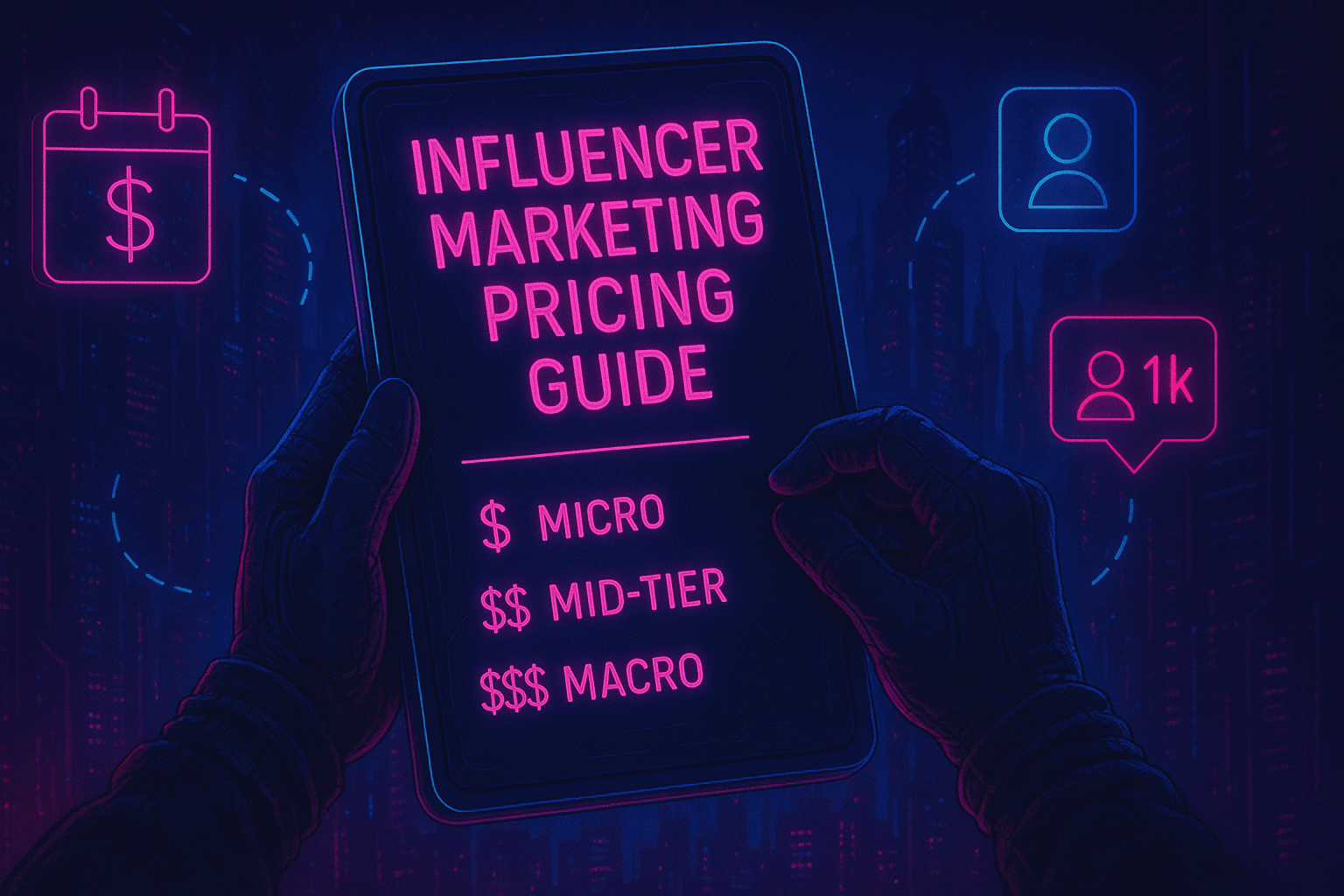
Influencer rates aren’t random. They’re shaped by a handful of core factors that nearly every creator and marketing manager considers. Understanding these variables will help you evaluate quotes fairly and avoid overspending.
1. Audience Size
This is the most obvious factor, but it’s not just about how many people follow a creator, it’s about who those people are. A creator with 15,000 highly engaged followers in your niche might outperform someone with 100,000 passive followers in a broad category.
- Nano creators (1K-10K) – lower cost, higher trust
- Micro creators (10K-100K) – best ROI for most brands
- Mid-tier/Macro (100K-1M) – bigger reach, higher price
- Mega/celebrity (1M+) – best for brand awareness campaigns
2. Engagement Rate
Engagement rate (likes + comments + shares ÷ followers x 100) is one of the most important indicators of real influence. A creator with strong engagement may charge more, and often they should, because their audience actually listens to them.
Engagement matters more than ever due to increased platform algorithm filtering.
3. Platform
Not all platforms are equal in terms of effort or value. A TikTok video takes more time to produce than an Instagram Story, and a YouTube video is on a completely different level, editing, scripting, filming, and retention matter.
Because of this, platform choice directly impacts cost.
4. Content Format and Production Level
Influencers often charge more for:
- highly produced videos
- multi-step tutorials
- trending audio that requires extra editing
- carousel posts
- long-form content
Brands may also pay more if they request multiple concepts or revisions.
5. Usage Rights and Licensing
This is one of the biggest pricing factors, and one that many brands overlook.
If you want to reuse the influencer’s content in ads, on your website, or in email marketing, you’ll pay for licensing. Posting content on their own page is one price; letting you run it as paid ads (“whitelisting” or “spark ads”) is a separate fee.
Creators charge usage fees because your ads benefit from their creative work, and often their face.
6. Exclusivity
If you don’t want a creator working with competitors for a certain period, that exclusivity comes with a cost, sometimes even higher than the post itself. The longer and broader the exclusivity, the higher the fee.
Typical Influencer Rates by Platform
The numbers you see in that section aren’t official fixed prices, they’re industry averages that brands and influencers commonly use to negotiate. Rates vary widely, but these benchmarks can help you evaluate quotes.
Why rates vary: engagement rate, niche demand (beauty, fashion, fitness, tech, etc.), usage rights/licensing, or creator reputation and etc.
Expect creators with highly engaged audiences or strong brand alignment to charge on the higher end.
Instagram Rates
Instagram is still one of the most popular platforms for brand partnerships. The platform remains a top choice for lifestyle, beauty, fashion, wellness, and food brands.
Stories ($10-$2,500+)
- Nano creators (1K-10K followers): $10-$50
- Micro creators (10K-100K): $100-$500
- Macro/mega: $600-$2,500+
Stories are usually cheaper, because they disappear in 24 hours and require less editing, but not always. Many creators charge more for Stories if they deliver high impressions, strong engagement, or strong link clicks.
Single Feed Post ($25-$5,000+)
- Nano: $25-$150
- Micro: $200-$600
- Macro/mega: $1,000-$5,000+
Posts stay permanently on the influencer’s profile, so they cost more.
Reels ($70-$15,000+)
- Nano: $70-$200
- Micro: $300-$900
- Macro/mega: $1,500-$15,000+
Reels are the highest-value format because they can go viral, have longer reach, and require more effort.
TikTok Rates
TikTok creators often charge more for videos because of the time required for filming and editing, and because video content typically drives higher sales.
TikTok Video ($50-$10,000+)
- Nano: $50-$125
- Micro: $150-$750
- Macro/mega: $1,200-$10,000+
- Series (2-3 videos): Usually discounted when bundled
- TikTok Shop content: Pricing varies; often commission-based
TikTok videos require editing, audio syncing, and trend awareness, so they naturally cost more. TikTok’s algorithm allows smaller creators to go viral, so nano and micro creators can provide excellent ROI.
YouTube Rates
YouTube is the most expensive platform because videos require substantial effort and usually deliver higher retention and long-term visibility.
Dedicated Video ($50-$20,000+)
- Nano: $50-$200
- Micro: $300-$1,000
- Macro/mega: $10,000-$20,000+
Integrated Mention ($500-$5,000) depending on length and channel size
This is when the influencer adds a short sponsored segment inside a regular video. Brands pay less because it’s not a full video.
Shorts ($150-$800)
These are cheaper because they’re short and quick to make.
YouTube content also continues to drive sales for months (or years) after posting.
Pinterest, X (Twitter), Facebook
While not the primary platforms for most brands, they still have value depending on your niche.
Pinterest Pins: $100-$600+
X : $30-$100 for nano; $150-$350 for micro; $900-$1,500+ for macro/mega
Facebook Post: $20-$80 for nano; $300-$1,500 for micro; $12,000+ for macro/mega
Blog Articles ($150-$2,500) depending on domain authority
Very valuable for SEO because they:
- stay online permanently
- drive organic Google search traffic
- help with backlinks
Nano vs Micro vs Macro Influencer Pricing
Influencer pricing varies widely depending on engagement, niche, platform, type of content, and the creator’s experience. Here’s how pricing typically breaks down across influencer tiers:
Nano Influencers (1K-10K followers)
Average rate: $10-$200 per post
Sometimes higher for high-engagement niches. Nano creators are small but powerful. Best for local brands, small businesses, and gifting campaigns. They tend to have highly loyal communities.
Micro Influencers (10K-100K followers)
Average rate: $100-$1,500 per post
Micros still outperform most other tiers in conversion rate, making them the top choice for brands focused on sales, not just awareness. Many micro creators are skilled content producers, which adds value beyond their follower count.
Macro Influencers (100K-1M followers)
Average rate: $600-$5,000 per post
Macro influencers offer scale and immediate visibility. Their reach is large enough to move the needle quickly. Best for national campaigns, bigger launches, major promotions or seasonal campaigns.
Mega Influencers (1M+ followers)
Average rate: $5,000+
When you work with mega influencers, you’re paying for aspirational branding, power, massive reach, and the association with a well-known name.
This tier is ideal for major brands, household names, global campaigns, or product launches that rely on hype and prestige. Megas rarely accept gifting; payment and usage rights are standard.
Content Usage Rights (Important – Don’t Skip This)
One of the most common mistakes brands make is assuming they own the influencer’s content once they’ve paid for the post. You don’t. Paying for a sponsored post only gives you the post itself, not ownership of the video, photo, or creative assets.
Influencers retain the copyright to their content unless you negotiate usage rights separately.
When you pay for a post, you’re paying for:
- the creator’s time (filming, editing, styling, writing, and planning)
- the post on their platform
- the content living on their account
You are not automatically paying for:
- use the content in paid ads
- put the content on your website
- use it in your email marketing
- repurpose it on your own social media channels (sometimes allowed, but not always)
- add it to your product pages, Amazon listings, or print materials
Many brands don’t realize this and get surprised when a creator charges extra for usage or licensing but creators charge these fees because your business is benefiting from their face, creativity, and content beyond social media. Creators own the copyright unless you pay for usage rights.
Types of Usage Rights
- Organic Usage: This allows your brand to repost the content organically on your own social channels.
No ads, no boosting, just simple reposting. - Paid Usage: This allows you to use the creator’s content in your paid ads. (This is usually the most expensive.)
- Whitelisting / Spark Ads: This allows you to run ads through the creator’s own handle.
Typical Usage Fees
- Organic rights: +20-50% of the base rate
- Paid usage (30 days): +50-100% of the base rate
- 3-6 months: +100-200% of the base rate
- 12 months or more: Varies widely; creators often prefer shorter terms
- Full buyout: Rare and expensive (This gives you ownership of the content forever)
Usage rights matter because, user-generated content (UGC) is outperforming traditional ads. Brands are using creator content everywhere, and creators know their work has real value, so they’re pricing accordingly.
How to Build an Influencer Campaign Budget
Here’s a simple way to estimate costs and build a realistic budget without guessing.
1. Define your goal
Are you aiming for:
- brand awareness?
- sales conversions?
- content creation?
- follower growth?
- event promotion?
Your goal determines the type of creators you need and how much you’ll spend.
2. Set your main campaign structure
Examples:
- 10 micro influencers with 1 post + 1 story each
- 50 nano influencers for a gifting-style awareness push
- 3 macro influencers for a launch campaign
- A mix of UGC creators for paid ads
- A long-term partnership with 1-2 creators
3. Estimate creator rates
Use the platform ranges above as benchmarks. Then add:
- usage rights (if needed)
- exclusivity (if required)
- product costs (if gifting or seeding)
- shipping costs
- agency management fees (if applicable)
4. Add a buffer
Influencer marketing always comes with unpredictable variables, timeline changes, extra revisions, additional content requests, etc. A 10-20% buffer keeps your budget flexible.
5. Review ROI expectations
Look for:
- cost per engagement
- cost per conversion
- reach vs payout
- content quality
- long-term creator partnerships
Your budget should reflect your expected results, not just the number of posts.
When You Should Pay Influencers vs. Gift Product
Not every influencer collaboration has to involve payment, and not every campaign should rely on gifting. The key is knowing when gifting is enough and when payment is expected so you set the right expectations and get the results you want.
When Gifting Works
This approach can work extremely well in specific situations, especially when the creator’s content style aligns with your brand.
Gifting (sending a product for free without payment) typically works when:
- the creator is nano or early micro
- the product is genuinely valuable or exciting (solves a real problem, feels unique, or has a “wow” factor)
- you’re aiming for brand awareness
- there’s no content requirement, influencers choose whether to post
Gifting is also great for:
- seeding campaigns before a big launch
- building long-term relationships with potential brand ambassadors
- identifying creators who genuinely like your product
- collecting early UGC-style content
When You Should Pay
If you need something specific, predictable, or professional, you should pay. Payment guarantees not just a post, but control over the quality, timing, and messaging.
Pay influencers when you need:
- guaranteed content
- high-quality production (creators who produce polished photos or studio-level videos expect compensation for their time)
- specific messaging or talking points (if you need the influencer to mention features, benefits, or details)
- usage rights
- predictable posting schedules
- larger reach (macro and mega influencers almost always work on a paid basis.)
Payment is also essential when working with:
- established micro creators
- macro or mega influencers
- professional UGC creators
- niche experts or professionals (chefs, dermatologists, stylists, coaches, etc.)
- creators with high engagement or strong performance metrics
If you need guaranteed deliverables, pay. If you’re okay with organic enthusiasm only, gift.
Conclusion
Influencer pricing doesn’t follow a universal rate card, because it shouldn’t. Every creator brings different value, different audience behavior, and a different level of creative skill. But once you understand the major pricing factors, the typical rates by platform, and how usage rights work, budgeting becomes far more predictable.
Whether you’re working with nano creators for grassroots buzz or macro influencers for nationwide visibility, the key is to approach influencer partnerships with clarity and intention. Know your goals. Set expectations. Pay fairly. And remember that good content is worth its price, especially when you can use it far beyond social media.
Leave a Reply